Monday, August 27, 2012

Graphic Novel Selections January 2013 to April 2013

Hi all, it's that time again to select the four from this list that we'd like to read in the faaaaar future.  Here's what I'm thinking, as always suggestions are welcome.  Source for descriptions: Amazon.com.


Underwater Welder by Jeff Lemire

Pressure. As an underwater welder on an oilrig off the coast of Nova Scotia, Jack Joseph is used to the immense pressures of deep-sea work. Nothing, however, could prepare him for the pressures of impending fatherhood. As Jack dives deeper and deeper, he seems to pull further and further away from his young wife and their unborn son. But then, something happens deep on the ocean floor. Jack has a strange and mind-bending encounter that will change the course of his life forever! Equal parts blue-collar character study and mind-bending science fiction epic, The Underwater Welder explores fathers and sons, birth and death, memory and truth, and the treasures we all bury deep down inside.

 Wizzywig by Ed Piskor
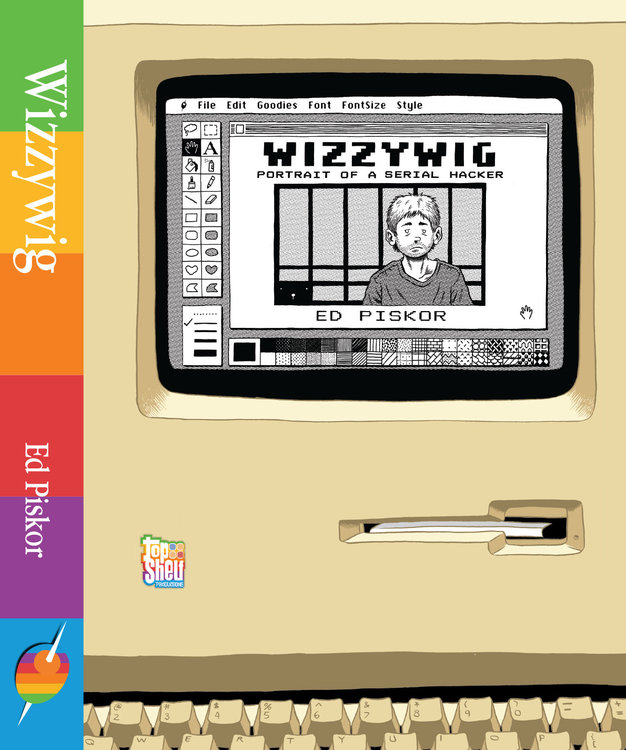
They say "What You See Is What You Get"... but Kevin "Boingthump" Phenicle could always see more than most people. In the world of phone phreaks, hackers, and scammers, he's a legend. His exploits are hotly debated: could he really get free long-distance calls by whistling into a pay phone? Did his video-game piracy scheme accidentally trigger the first computer virus? And did he really dodge the FBI by using their own wiretapping software against them? Is he even a real person? And if he's ever caught, what would happen to a geek like him in federal prison? Inspired by the incredible stories of real-life hackers, Wizzygig is the thrilling tale of a master manipulator - his journey from precocious child scammer to federally-wanted fugitive, and beyond. In a world transformed by social networks and data leaks, Ed Piskor's debut graphic novel reminds us how much power can rest in the hands of an audacious kid with a keyboard.
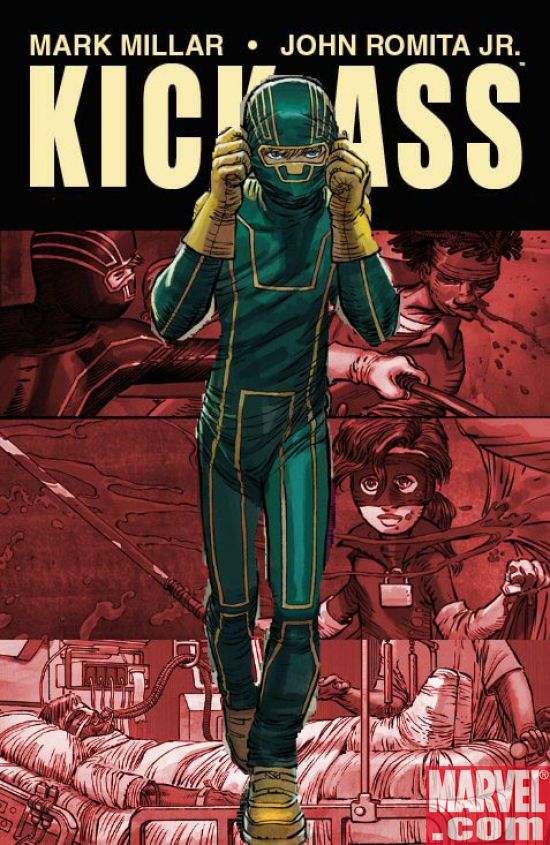


Kick-Ass vols. 1 & 2 by Mark Millar
Have you ever wanted to be a super hero? Dreamed of donning a mask and just heading outside to some kick-ass? Well, this is the book for you - the comic that starts where other super-hero books draw the line. Kick-Ass is realistic super heroes taken to the next level. Miss out and you're an idiot!


Funhome: A Family Tragicomic by Alison Bechdel

In this groundbreaking, bestselling graphic memoir, Alison Bechdel charts her fraught relationship with her late father. In her hands, personal history becomes a work of amazing subtlety and power, written with controlled force and enlivened with humor, rich literary allusion, and heartbreaking detail.

Distant and exacting, Bruce Bechdel was an English teacher and director of the town funeral home, which Alison and her family referred to as the "Fun Home." It was not until college that Alison, who had recently come out as a lesbian, discovered that her father was also gay. A few weeks after this revelation, he was dead, leaving a legacy of mystery for his daughter to resolve.
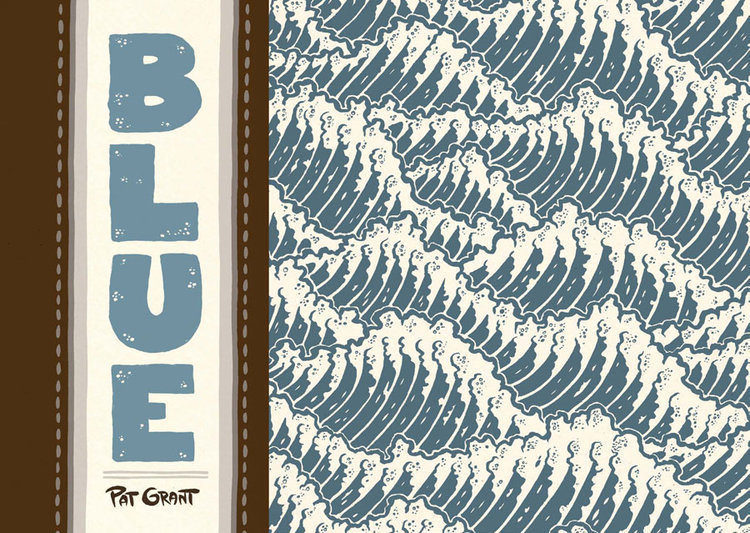
 

Blue by Pat Grant

Part autobiography, part science fiction, Blue is the story of three spotty teenagers who skip school to go surfing, only to end up investigating rumors of a dead body in their beach town.


http://images.darkhorse.com/covers/300/15/15762.jpg 
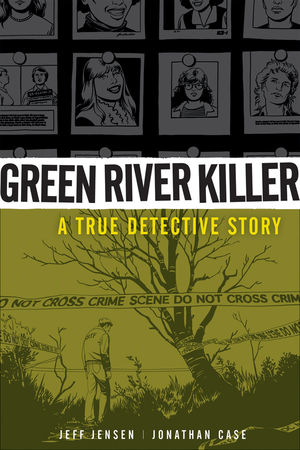
Green River Killer by Jeff Jensen

Throughout the 1980s, the highest priority of Seattle-area police was the apprehension of the Green River Killer, the man responsible for the murders of dozens of women. But in 1990, with the body count numbering at least forty-eight, the case was put in the hands of a single detective, Tom Jensen. After twenty years, when the killer was finally captured with the help of DNA technology, Jensen and fellow detectives spent 188 days interviewing Gary Leon Ridgway in an effort to learn his most closely held secrets-an epic confrontation with evil that proved as disturbing and surreal as can be imagined. Written by Jensen's own son, acclaimed entertainment journalist Jeff Jensen, Green River Killer: A True Detective Story presents the ultimate insider's account of America's most prolific serial killer.

http://photo.goodreads.com/books/1342197956l/15704307.jpgSaga vol. 1 by Brian K Vaughan

When two soldiers from opposite sides of a never-ending galactic war fall in love, they risk everything to bring a fragile new life into a dangerous old universe. From New York Times bestselling writer Brian K. Vaughan (Y: The Last Man, Ex Machina) and critically acclaimed artist Fiona Staples (Mystery Society, North 40), Saga is the sweeping tale of one young family fighting to find their place in the worlds. Fantasy and science fiction are wed like never before in this sexy, subversive drama for adults. This specially priced volume collects the first six issues of the smash-hit series The Onion A.V. Club calls "the emotional epic Hollywood wishes it could make."

The Hypo by Noah Van Sciver

http://forbiddenplanet.co.uk/blog/wp-content/uploads/2012/08/Hypo-The-Melancholic-Young-Lincoln-noah-van-sciver-cover.jpgThe debut graphic novel from (Denver-based) Noah Van Sciver follows the twentysomething Abraham Lincoln as he loses everything, long before becoming our most beloved president. Lincoln is a rising Whig in the state’s legislature as he arrives in Springfield, IL to practice law. With all of his possessions under his arms in two saddlebags, he is quickly given a place to stay by a womanizing young bachelor who becomes his friend and close confidant. Lincoln builds a life and begins friendships with the town’s top lawyers and politicians. He attends elegant dances and meets an independent-minded young woman from a high-society Kentucky family, and after a brisk courtship, becomes engaged. But, as time passes and uncertainty creeps in, young Lincoln is forced to battle a dark cloud of depression brought on by a chain of defeats and failures culminating into a nervous breakdown that threatens his life and sanity. This cloud of dark depression Lincoln calls “The Hypo.” Dense crosshatching and an attention to detail help bring together this completely original telling of a man driven by an irrepressible desire to pull himself up by his bootstraps, overcome all obstacles, and become the person he strives to be. All the while, unknowingly laying the foundation of character he would use as one of America’s greatest presidents.

Tuesday, August 7, 2012

Saga of the Swamp Thing series by Alan Moore


Our next book club selection is one of the most famous comics runs in history, Alan Moore's 1980s Swamp Thing run.  Moore took what started as a rather cheesy action comic into a gothic, cerebral, and quite adult series.  Swamp Thing becomes more than a monster in the first issue and the series gets even less conventional and more creative from there.  Here are discussion questions for this month:

1.  Many reboots of obscure superheroes have been done.  What did Alan Moore do differently?  

2.  Swamp Thing is a small part of the DC Universe, protecting only "the Green" and his swamp in Louisiana.  How do Moore and other writers make him important DC storylines?

3.  What is the importance of Abigail in Swamp Thing's life?  

http://i.ebayimg.com/t/SAGA-SWAMP-THING-VOL-1-HC-ALAN-MOORE-/13/!B(nR3DQB2k~%24(KGrHgoH-EIEjlLlzEZJBKdOtv2(8g~~_35.JPG4.  Many of Moore's Swamp Thing arcs focus on the characters and happenings around him rather than himself.  One later arc sees Abby defending her love for Swamp Thing, another involves Constantine and the fate of Hell.  Nolan's Batman films seem to follow the same formula of not focusing too much on the hero.  What are your thoughts on this storytelling technique?

5.  Other than Moore's run on Swamp Thing, it seems the character has not had much success staying on for extended series.  Why is this?  Does a horror/fantasy character not fit in the DC universe?

6.  Is it inevitable that a hero must die for a reboot to happen?

7.  What did you think of the inclusion of the Floronic Man?  What was Moore's thinking in introducing a character in the DC Universe with similar powers?

8.  The film and television adaptations of Swamp Thing failed spectacularly.  One reviewer of USA's live action Swamp Thing said it wasn't even entertainingly bad.  What's so difficult about getting the character right?

9.  The story arcs occasionally touch on environmentalism and a Bigfoot-esque hunt for Swamp Thing.  Was Moore wise not to focus more on these ideas?

10.  Moore was writing Watchmen simultaneously with Swamp Thing for a while.  Did you see any evidence or hints of this?

11.  Swamp Thing was the first to abandon the Comics Code Authority and cater to adults.  Is this evident?  What effect does that have on the series and other comics released at the time?

Thursday, July 12, 2012

Essex County by Jeff Lemire


https://blogger.googleusercontent.com/img/b/R29vZ2xl/AVvXsEiuq5oBIViuzVxXrrA2-qJmvIrlYyYu6CiInECjiHirhpyDhxJpsV-b5SQChY9Zv_CLIJ4LDS7xerD2c7h-tt6HH7NJglhtfuaGTHXMC6yHzD-EGbhPu-OaSQEePnZe76JRxcQFVRnmJLg/s1600/essexcounty.jpgHailed as one of the greatest pieces of Canadian literature by well, Canadians and by comics fans as emotionally resonant, Essex County had a lot to live up to.  Fortunately, it delivers on the most part and delivers a trio of interconnected stories in a style that recollects Thompson's Blankets.  Here are the discussion questions: 

1.  What do you think Jeff Lemire set out to do in writing Essex County?

2.  Jeff Lemire writes both traditional superhero comics and these independent autobiographical comics.  Most authors only do one or the other.  Why?

3.  What is the significance of the bird?

4.  How do the characters in Essex County deal with grief and loss?

5.  What is a superhero to Lester?

6.  How does Essex County differ from other similar graphic novels such as Blankets?

7.  Critics applaud Lemire's subtlety and his ability to set a mood.  How does he accomplish this?

8.  Like Concrete, Lemire revels in the mundane.  What differences are there in his prose that makes for more or less riveting storytelling?

9.  The stick-tapping scene is often cited as an example of Lemire's talents.  What does this scene accomplish? 

10.  Lemire creates conflict between characters by having them communicate poorly or in some cases, not communicate at all.  Is this a contrived way of creating conflict or does it ring true to the way people behave?

11.  What is the importance of the setting?  Could the same story take place elsewhere?

12.  How did you feel about the loose line art style?  What mood or visual feel does it give in comparison to Habibi's intricate page designs and mosaics?

Monday, June 4, 2012

Concrete vol. 1: Depths by Paul Chadwick


Concrete is a non-traditional superhero created by Paul Chadwick.  Chadwick has tried a multitude of times in different stories to explain Concrete's origin story, but let's just say it involves aliens.  Concrete has superpowers akin to more traditional superheroes, but his stories are characterized by using his powers for noble causes, such as rescuing miners from a collapsed cave.  Below are discussion questions for the next book club:

1.  Paul Chadwick seems to want Concrete to be a non-traditional superhero.  In what ways does he accomplish this?

2.  Were you satisfied by Concrete's origin story?  Was it superfluous?

3.  What is the significance of Concrete being a former Senatorial speech writer?

4.  What commentary on products and promotion is Chadwick making with all of the Concrete memorabilia?

5.  Did you find the art or layout of Concrete to offer anything of note?

6.  Chadwick has said these stories are semi-autobiographical, such as the one about hiking.  Compare what Concrete tells us about its author versus what Shortcomings says about its author.  Does the lens through which the author reflects upon him or herself make a difference in the end result?

7.  Was it wise for Chadwick to focus on the human element of these stories?  What is offered here that isn't offered in say, The Thing plot arcs?

8.  Concrete was written in the early 80s.  Has this graphic novel aged well?  How so?  What modern conventions are we missing/now accustomed to?

9.  Chadwick seems content with Concrete doing the mundane in his stories.  Is this purposeful to better focus on the human elements of the characters?  Why not have the best of both worlds: big exciting set pieces and human elements?  

10.  Concrete, who wants to write of his adventures, is surrounded by two writers: one for a scientific journal and one aspiring novelist.  What is the significance of this combination of people?

11.  The aliens who transplanted Concrete's body were never heard from again and probably died on their way back to their home planets, Poochie-style.  Why?

12.  The cover up story is that Concrete is a cyborg created by the U.S. government, as opposed to the whole alien thing.  How is this possibly a better alternative  for the masses to know?

13.  Concrete clearly loves Maureen on some level.  Can a doctor/patient relationship or a rock person/non-rock person relationship work?  Why is this important to the series?

Thursday, May 3, 2012

Habibi by Craig Thompson

Habibi by Craig Thompson took six years to create and it shows. The incredible detail and research that went into this graphic novel is a shining beacon of accomplishments in the medium. As with Blankets, Thompson explores society and religion's relationship with sex while developing characters, symbolism, and motifs. Habibi especially takes an interest in Arabian calligraphy, which can be seen throughout the tome of a graphic novel. Here are the spoiler-filled discussion questions:

1. What is the significance of calligraphy in the story and in the art?

2. Habibi has been criticized for treating sexuality as forbidden or shameful. Your thoughts?

 3. Why is Habibi's world a mashup of old and new?

4. Keeping in mind the themes of love and affection in Blankets, how has Craig Thompson taken those ideas and evolved them in Habibi? What does it say about his evolution as a writer?

5. What does Habibi say about humanity's relationship with nature?

6. Did you find the interspersed Quran stories enriched the narrative?

7. Robyn Creswell of The New York Times called this book "a work of fantasy about being ashamed of one’s fantasies." Your thoughts?

8. Citing the portrayal of Arabs in Habibi, one critic said "The problem in making something knowingly racist is that the final product can still be read as racist." Do you agree?

9. Why did Zam become a eunuch? Was "purifying his mind" not enough to dispel his disgust with his thoughts and the sexual transgressions against Dodola?

10. What is the importance of the fisherman in the third act?

11. What does Zam and Dodola's ship in the desert represent?

 12. Is romantic love that excludes sex possible? At that point, is it simply sibling-esque love?

Wednesday, April 11, 2012

Graphic Novel Selections September to December 2012

Hey all, this round of graphic novel selections was inspired partially by the Eisner nominees, so we've got some potential award-winners and mostly new books here. These are what I'm thinking, we need to narrow these down to four.


The Arrival by Shaun Tan - "Tan captures the displacement and awe with which immigrants respond to their new surroundings in this wordless graphic novel. It depicts the journey of one man, threatened by dark shapes that cast shadows on his family's life, to a new country. The only writing is in an invented alphabet, which creates the sensation immigrants must feel when they encounter a strange new language and way of life. A wide variety of ethnicities is represented in Tan's hyper-realistic style, and the sense of warmth and caring for others, regardless of race, age, or background, is present on nearly every page."


Northlanders by Brian Wood - A gory Vertigo graphic novel series depicting the Northlanders, vikings of beardedness. A loose series, each trade follows a different protagonist and time period.


Epileptic by David B. - An autobiographical graphic novel in Craig Thompson's style about the author's epileptic brother. The art's swirly style visualizes the disability.


Transmetropolitan by Warren Ellis A dystopian future series follows journalist Spider Jerusalem who has various conspiracy and craziness-ridden adventures.


Jim Henson's Tale of Sand by Jim Henson and Jerry Juhl - "Discovered in the Archives of The Jim Henson Company, A Tale of Sand is an original graphic novel adaptation of an unproduced, feature-length screenplay written by Jim Henson and his frequent writing partner, Jerry Juhl. A Tale of Sand follows scruffy everyman, Mac, who wakes up in an unfamiliar town, and is chased across the desert of the American Southwest by all manners of man and beast of unimaginable proportions. Produced with the complete blessing of Henson co-CEO Lisa Henson, A Tale of Sand will allow Henson fans to recognize some of the inspirations and set pieces that appeared in later Henson Company productions."


Daredevil by Mark Waid - The first five issues of DC's Daredevil reboot has the most Eisner nominations this year and is getting heaps of praise.


Wonder Woman by Brian Azzarello - Wonder Woman rebooted as more of a horror comic, "weird and worth your while."


iZombie by Chris Roberson - "Told from a female zombie’s perspective, this smart, witty detective series mixes urban fantasy and romantic dramedy. Gwendolyn “Gwen” Dylan is a 20-something gravedigger in an eco-friendly cemetery. Once a month she must eat a human brain to keep from losing her memories, but in the process she becomes consumed with the thoughts and personality of the dead person – until she eats her next brain. She sets out to fulfill the dead person’s last request, solve a crime or right a wrong."

Wednesday, March 28, 2012

Marvel 1602 by Neil Gaiman


Marvel 1602 is Neil Gaiman's first return to graphic novels after finishing the Sandman series and novels such as Neverwhere and American Gods. Much was expected of it and all said and done, it's an audience-splitter. I did not gain an appreciation for it until a second reading. In any case, the story and its characters play to Gaiman's strengths despite a questionable and hurried ending. Here are the questions:

1. In the Afterword, Gaiman points out that Marvel 1602 was divisive among critics. Why do you think this is?

2. With Marvel 1602 and The Eternals, Gaiman has now penned two alternate universe introductions that on their own are popular but these mythologies have mostly failed to continue past the first trade, mostly. Why?

3. Gaiman contends that he was trying not to write in the same style as Sandman in Marvel 1602. Would you say this is a detriment to the writing?

4. Gaiman wrote Marvel 1602 as a post 9/11 no guns, no bombs story. Does this knowledge make any aspects of the graphic novel more significant?

5. What Marvel characters didn't make the cut that you'd have liked to see?

6. Marvel 1602 included the X-Men, but not Wolverine, who even has time-appropriate old timey chops. Your thoughts on his exclusion?

7. Some criticize Marvel 1602's story for rationalizing and explaining the why of these characters being in an Elizabethan time period. Would have it been better unexplained?

8. Were there any 1602-ized characters you didn't like?

9. Gaiman is often criticized for his ability to wrap up his often complex interweaving storylines. Another tidbit to consider: he almost always needs two or more issues to wrap up what are usually proposed to be five-issue arcs. (This and The Eternals). Your thoughts?

10. Other one-shot graphic novels like Kingdom Come require an extensive knowledge of the universe or a Wikipedia page handy while you are reading it. Does Marvel 1602 suffer the same fate?

11. Did the inevitability of Otto Von Doom and Peter Parquagh's fates detract from their character arcs?

12. Where would you have taken Marvel 1602 had it continued? Would it be a better alternate reality a la the X-Men canon?